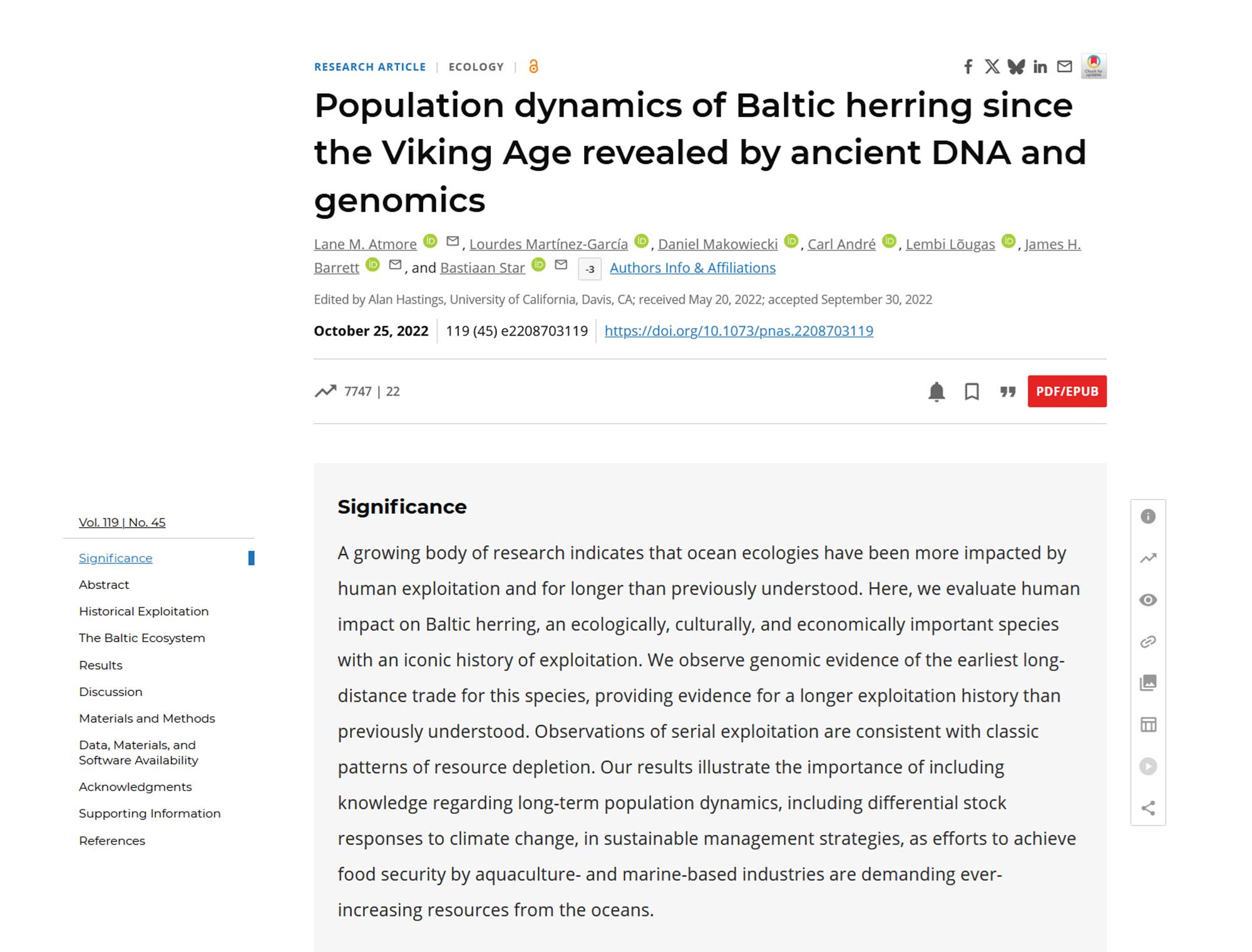
A growing body of research indicates that ocean ecologies have been more impacted by human exploitation and for longer than previously understood.
Here, we evaluate human impact on Baltic herring, an ecologically, culturally, and economically important species with an iconic history of exploitation. We observe genomic evidence of the earliest long-distance trade for this species, providing evidence for a longer exploitation history than previously understood.
Observations of serial exploitation are consistent with classic patterns of resource depletion.
Our results illustrate the importance of including knowledge regarding long-term population dynamics, including differential stock responses to climate change, in sustainable management strategies, as efforts to achieve food security by aquaculture- and marine-based industries are demanding ever-increasing resources from the oceans.